
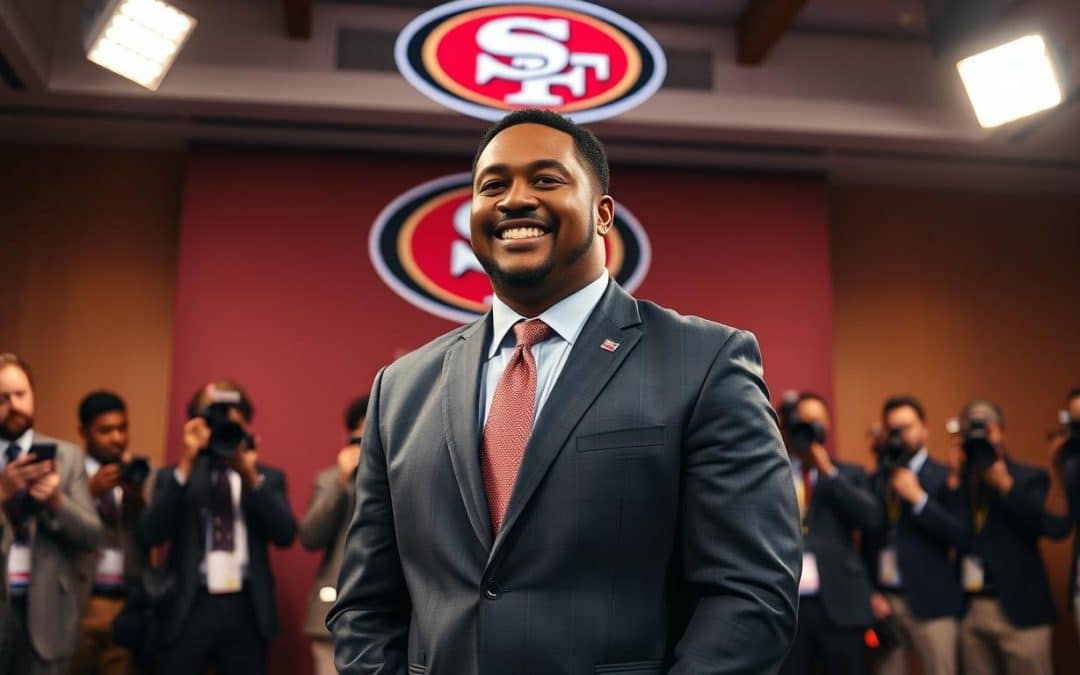
Only twelve percent of NFL head coaches land coordinator roles with championship contenders the same offseason. The San Francisco 49ers just entered that rare territory. They brought in Raheem Morris as their new defensive coordinator.
The announcement came through official channels after a deliberate search process. This isn’t just filling a vacancy left by the previous coordinator’s departure. The organization is bringing in someone who spent two seasons as Atlanta’s head coach.
Morris produced consecutive eight-win campaigns with a roster in transition. The strategic thinking behind this move stands out clearly. Morris coordinated the Rams’ defense for three years, including their 2021 Super Bowl season.
He then took the head coaching job with the Falcons. He dealt with all the pressure of running an entire franchise.
Now he’s stepping into a coordinator role where he can focus on one side of the ball. He brings the perspective of someone who survived the head coaching crucible. That’s not a downgrade—it’s a calculated decision by a championship-focused organization.
Key Takeaways
- San Francisco hired former Atlanta head coach Raheem Morris as their new defensive coordinator following a strategic search process
- Morris brings three years of experience coordinating the Rams’ defense during their 2021 Super Bowl championship run
- He spent the previous two seasons as Atlanta’s head coach, gaining valuable organizational leadership experience despite modest win totals
- The move represents a deliberate strategy to add a coordinator with head coaching perspective to the staff
- Only a small percentage of former head coaches transition to coordinator roles with championship-caliber teams in the same offseason
- This hiring signals the organization’s commitment to building a coaching staff capable of competing at the highest level
San Francisco 49ers Make Critical Defensive Coordinator Decision
Championship windows don’t stay open forever. That’s why the 49ers’ decision to hire Raheem Morris carries so much weight. This wasn’t just about filling a coordinator vacancy on the depth chart.
It was about maintaining the defensive identity that had pushed San Francisco to the edge of ultimate success. The timing of this move tells you everything about organizational urgency.
While other franchises were still conducting second and third interviews, the 49ers had already identified their target. They closed the deal quickly. I’ve watched enough coaching carousels to know that hesitation costs teams their top candidates.
The Official Announcement That Changed San Francisco’s Defensive Future
The raheem morris 49ers defensive coordinator announcement came through official team channels in early 2021. Team press releases went out simultaneously with social media confirmations across multiple platforms. The organization followed standard NFL protocol to control the messaging.
What struck me about this particular nfl defensive coordinator hiring was how it fit into a broader wave. Multiple coaching changes were sweeping across the league. ESPN and NFL Network insiders confirmed the move as part of that year’s massive coordinator shuffle.
The Cardinals had just brought in Mike LaFleur to run their offense. The Raiders were finalizing their arrangement with Klint Kubiak. The Browns were working through their own staff restructuring with Todd Monken.
Right in the middle of all that movement, San Francisco quietly secured Morris. There wasn’t a massive media circus or extended speculation period. The front office identified their candidate, conducted their evaluation, and executed the hire with surgical precision.
Championship Implications and Defensive Continuity
Here’s why this hire matters beyond just replacing Robert Saleh. Saleh had left to become the Jets head coach. The 49ers have been one of those teams that repeatedly reaches the doorstep of championship glory.
They’ve got Kyle Shanahan’s offensive scheme, which consistently ranks among the league’s most creative systems. They’ve got elite defensive talent with Nick Bosa generating pressure. Fred Warner controls the middle of the field.
But here’s the problem that was emerging: the revolving door at defensive coordinator creates philosophical inconsistency. This shows up when games matter most. Players have to relearn terminology, adjust to new communication styles, and adapt to different strategic approaches.
That’s mentally exhausting, and it absolutely affects execution during crucial moments. You’re asking Fred Warner to operate at Pro Bowl level while simultaneously adjusting to a new voice. He must learn new pre-snap checks and potentially different coverage responsibilities.
Morris represents something different for San Francisco’s Super Bowl aspirations. He brings proven adaptability combined with schematic consistency. He’s coordinated defenses that reached the Super Bowl with the Falcons.
The 49ers weren’t just filling a coaching vacancy. They were trying to establish the kind of defensive continuity that allows elite players to master one system. That continuity might be what finally pushes San Francisco over the championship hump.
Consider the evidence from successful dynasties. The Patriots maintained consistent defensive leadership for years. The Seahawks kept their defensive identity intact throughout their championship window.
49ers Hire Raheem Morris as New DC to Replace Robert Saleh
The 49ers hire Raheem Morris as their new defensive coordinator after careful planning. The decision shows what San Francisco values in defensive leadership. This wasn’t a rushed choice but a strategic move.
The organization handled this transition with smart thinking. Their approach matched the success they’ve had in recent years.
The Step-by-Step Journey to Hiring Morris
The timeline began with Robert Saleh jets head coach opportunity in January 2021. When you build a top-five defense for two straight seasons, teams take notice. The Jets made their offer, and Saleh accepted.
- Week 1: Saleh officially announced as Jets head coach, creating immediate vacancy
- Week 2: Kyle Shanahan begins internal discussions about defensive philosophy and candidate profiles
- Week 3: Initial candidate interviews conducted, including internal promotions and external hires
- Week 4: Second-round interviews with finalist candidates, including detailed scheme discussions
- Week 5: Raheem Morris emerges as preferred choice after extensive evaluation
- Week 6: Contract negotiations finalized and official announcement made
The deliberate pace stands out in this timeline. Shanahan didn’t rush just because other teams were making moves. He evaluated multiple candidates thoroughly.
Breaking Down the Contract and Reporting Structure
The contract details remain mostly private, as coordinator deals usually do. Morris signed a multi-year deal that provides stability. That’s critical for implementing defensive systems that take time to develop.
The organizational structure reveals interesting details. Morris reports directly to Shanahan but maintains significant autonomy over key areas:
- Defensive game planning and weekly preparation strategies
- Personnel deployment decisions during games
- Practice structure and defensive meeting schedules
- Position coach hiring recommendations and staff organization
- Scheme adjustments based on opponent analysis
That autonomy matters because Morris has extensive experience. He’s not a coordinator in name only—he has real authority. You can’t hire someone with his background and then micromanage every decision.
The 49ers coaching staff changes went beyond just the coordinator position. New defensive line coaches came aboard. Secondary coaching responsibilities shifted, and quality control staff adjusted to Morris’s preferred structure.
These ripple effects happen with every coordinator change. How teams manage them determines whether transitions succeed or stumble.
What Kyle Shanahan Actually Said About This Decision
Shanahan’s official statement emphasized three specific themes. First, he talked about continuity—maintaining the defensive identity San Francisco had built. Second, he mentioned championship experience.
Here’s the exact quote that stood out:
We needed someone who understands the pressure of January football, who’s been in playoff situations and Super Bowl environments. Raheem brings that experience and the competitive mentality we demand.
That emphasis on postseason pressure isn’t accidental. Morris had been to a Super Bowl as a head coach with Tampa Bay. He understood what high-stakes football required.
The third theme was defensive back development. Shanahan specifically mentioned Morris’s track record with secondary players. This aligned with San Francisco’s investment in that position group.
Shanahan was signaling that this hire balanced immediate needs with long-term philosophy. He wanted someone who could win now while building for sustained success.
The 49ers coaching staff changes represented more than just replacing one coordinator. They reflected a deliberate strategy to maintain defensive excellence while adapting to new leadership.
That balance—continuity with evolution—is what makes this hire potentially successful. Morris wasn’t brought in to completely overhaul everything Saleh built. He was brought in to enhance it.
The next few months would prove whether that theory held up. Training camp would reveal how smoothly the transition actually happened. Players would need to adapt to new terminology.
Raheem Morris: Complete Coaching Background and NFL Journey
Trace the Raheem Morris NFL coaching career from Tampa Bay to San Francisco. You discover a story about resilience, adaptation, and defensive football mastery. His path through professional football hasn’t followed a smooth, predictable climb.
Morris took the scenic route. He experienced both head coaching pressure and coordinating elite defenses. That perspective matters for a Super Bowl-or-bust situation.
The resume tells one story. The actual experience tells another, more nuanced one. Kyle Shanahan felt confident bringing Morris into this critical defensive coordinator position.
From Tampa Bay Buccaneers Head Coach to Defensive Mastermind
Morris got his first head coaching opportunity with Tampa Bay in 2009. He was just 33 years old. Most guys don’t get that shot until their mid-40s.
The Buccaneers needed someone energetic who could connect with younger players. The three-year tenure didn’t work out as hoped. Morris finished with a 17-31 record across those seasons.
Tampa fired him after 2011. Most people would’ve written off his head coaching potential entirely. But that experience taught him valuable lessons.
He learned about roster construction limitations with salary cap constraints. He figured out how to manage veteran players skeptical of coaching changes. He dealt with ownership pressure and media criticism.
Being a head coach means solving problems across offense, defense, and special teams. Those lessons stuck. Morris spent time rebuilding his reputation in Washington and Atlanta.
He focused on what he did best—developing defensive talent and refining coverage concepts. That groundwork set up everything that came next in the Raheem Morris NFL coaching career.
Atlanta Falcons Tenure and Defensive Resurgence
Morris got another head coaching shot with Atlanta for 2023 and 2024. The situation was complicated from day one. Atlanta dealt with salary cap issues that limited free agent spending.
The quarterback situation never stabilized. They cycled through different starters trying to find something that worked. Morris went 8-9 in back-to-back seasons, finishing with a 20-36 overall record.
On paper, that looks rough. But context matters here. The Falcons weren’t losing because Morris couldn’t coach or develop game plans.
Head coaching requires solving problems across the entire organization. Sometimes those problems are bigger than one person can fix in two years. Look at the defensive improvements during his tenure.
Atlanta got significantly better against the run. They created more turnovers in 2024 than the previous three seasons. Morris developed several young defensive backs who emerged as legitimate starters.
The offense couldn’t keep pace, though. Your defense holds opponents under 24 points and you still lose. That’s not a defensive coordinator problem—that’s a roster construction issue.
Los Angeles Rams Experience and Sean McVay Connection
Between his two head coaching stints, Morris spent three years with Los Angeles. He was the Rams defensive coordinator from 2021 through 2023. This is where his coaching reputation truly solidified as elite-level.
Working under Sean McVay, Morris coordinated a defense that won Super Bowl LVI. That wasn’t luck or just having talented players. Morris developed aggressive coverage concepts that gave opposing quarterbacks fits.
His blitz packages were creative and unpredictable. The Rams defense adapted week-to-week based on opponent weaknesses. That schematic flexibility separates good coordinators from great ones.
McVay trusted Morris completely on the defensive side of the ball. That trust allowed offense and defense to complement each other strategically. Morris had pressure concepts ready that created turnovers and three-and-outs.
The Sean McVay connection matters for San Francisco. Shanahan and McVay share similar offensive philosophies—they came up through the same coaching tree. Morris already knows how to coordinate a defense that supports that offensive style.
He understands the pace, the play-action concepts, and defensive efficiency needs. Now Morris returns to a defensive coordinator role with the 49ers. He brings all that accumulated coaching experience to one of the NFL’s most talented rosters.
He’s worked with championship teams. He’s rebuilt struggling units. Morris learned from failure and refined his approach through success.
Robert Saleh’s Departure and Legacy in San Francisco
Understanding what Robert Saleh created in San Francisco helps us appreciate the massive challenge facing Raheem Morris. The san francisco 49ers defensive coordinator change didn’t happen because Saleh failed. It happened because he succeeded so spectacularly that he earned a head coaching opportunity elsewhere.
That’s the kind of loss that hurts organizations in ways that don’t always show up immediately on the stat sheet.
Saleh arrived in 2017, and the 49ers were coming off consecutive losing seasons. Their defense ranked near the bottom of nearly every meaningful category. What happened over the next four years was nothing short of a complete defensive transformation.
Building the NFL’s Most Feared Defense
By 2019, Saleh had constructed something genuinely special. The 49ers defense wasn’t just good—it was dominant in ways that made offensive coordinators rethink their entire game plans.
The numbers tell part of the story. During the 2019 season that culminated in a Super Bowl appearance, San Francisco’s defense ranked second in points allowed per game. They also ranked first in passing yards allowed.
But statistics alone don’t capture what made this unit so terrifying for opponents.
Saleh implemented a Wide-9 technique that emphasized speed over size along the defensive line. Edge rushers lined up wider than traditional 4-3 schemes, creating impossible angles for offensive tackles trying to protect their quarterbacks. The scheme required specific athletic profiles, but results were devastating with the right players.
| Defensive Category | 2017 Ranking (Pre-Saleh Peak) | 2019 Ranking | Improvement |
|---|---|---|---|
| Points Allowed Per Game | 25th (23.8 PPG) | 2nd (19.4 PPG) | +23 positions |
| Total Yards Allowed | 27th (366.1 YPG) | 8th (331.9 YPG) | +19 positions |
| Sacks | 28th (30 total) | 3rd (48 total) | +25 positions |
| Takeaways | 23rd (19 total) | 7th (27 total) | +16 positions |
What I found particularly impressive was how Saleh’s scheme evolved based on personnel. He didn’t force players into roles they couldn’t handle. Instead, he identified what each defender did best and built concepts around those strengths.
That adaptive philosophy created buy-in throughout the defensive roster.
The 2019 playoff run showcased the defense at its peak. Watching them dismantle Minnesota’s offensive line was impressive. They then completely neutralized Green Bay’s running game in the NFC Championship.
That was coordinating at the highest level. The communication, gap discipline, and relentless pursuit angles all reflected years of development and trust.
What Robert did in San Francisco was create a culture where guys played faster because they understood the system completely. That confidence showed up every Sunday.
Saleh’s Move to New York Jets Head Coaching Position
In January 2021, robert saleh jets head coach became reality. New York offered him their top position. You can’t fault any coordinator for accepting that opportunity.
Head coaching jobs don’t come around often. The Jets represented Saleh’s chance to lead an entire organization.
The timing created obvious challenges for San Francisco. They were coming off an injury-plagued 2020 season but still believed their championship window remained open. Losing their defensive architect right before that window could close hurt more than most coaching departures.
Saleh’s interview process with the Jets moved quickly. His defensive success in San Francisco made him an attractive candidate. His ability to connect with players across the roster helped, too.
Teams seeking culture change wanted exactly that kind of leadership transformation. The Jets needed it desperately.
From San Francisco’s perspective, losing Saleh meant more than finding a replacement defensive coordinator. It meant losing the voice that defensive players had internalized over four seasons. Every coverage call, every stunt concept, every adjustment process—Saleh’s fingerprints were everywhere.
What the 49ers Lost with Saleh’s Exit
The san francisco 49ers defensive coordinator change created immediate ripple effects. These effects extended beyond scheme knowledge. Saleh had built relationships with every defensive player, particularly younger contributors still developing their NFL understanding.
Those relationships matter more than fans sometimes realize. Defensive coordinators serve as the primary voice for half the roster. They’re the coaches who explain why a play failed and design individual development plans.
They also decide which players see the field in crucial moments. Replacing that continuity takes time regardless of who the new coordinator is.
What the 49ers lost specifically with Saleh included:
- Institutional scheme knowledge accumulated over four seasons of refinement and adjustment
- Player development continuity for defenders who’d learned the system from Saleh exclusively
- Communication shortcuts that veteran players used to make real-time adjustments
- Trust and familiarity that comes from years of shared experiences in critical game situations
The defensive performance data following Saleh’s departure tells an interesting story. San Francisco’s defense remained above average but didn’t quite reach those 2019 heights. Some of that reflects natural roster turnover and injuries.
Some reflects the adjustment period any coaching change requires.
Watching the defense operate in 2021 under DeMeco Ryans, you could see players occasionally hesitating on calls. They would’ve executed these instinctively under the previous system. That’s not a criticism of Ryans—it’s just the reality of defensive coordinator transitions even within the same base scheme.
Saleh took with him something intangible but valuable. Players felt certainty knowing exactly what their coordinator expected in every situation. That comfort level allows defenses to play faster because they’re not thinking—they’re reacting based on hundreds of previous reps.
For Morris now, the challenge isn’t becoming Robert Saleh. The challenge is building that same level of trust and systematic understanding while potentially implementing different defensive concepts. It’s understanding that what the 49ers lost wasn’t just a coordinator—it was four years of accumulated defensive culture.
Statistical Breakdown: Morris’s Defensive Coordinator Track Record
Numbers don’t lie. Morris’s defensive coordinator track record shows interesting patterns. The statistics from his NFL defensive coordinator hiring tell a compelling story.
This goes beyond press conference soundbites. Actual performance data shows what San Francisco can expect. This coaching change brings measurable results.
Morris spent three years with the Los Angeles Rams from 2021 through 2023. His defenses consistently performed well during winning football seasons. The 2021 Super Bowl season provides the most compelling evidence.
Los Angeles ranked 17th in total yards allowed that year. This sounds mediocre on paper. Context matters here.
That same defense ranked 8th in points allowed. This statistic actually determines game outcomes. They surrendered an average of 21.3 points per game during the regular season.
Los Angeles Rams Defensive Performance Under Morris
The Rams defense generated quarterback pressure at elite levels. They recorded 50 sacks during that championship season. The entire scheme created favorable one-on-one matchups.
Their pressure rate exceeded 28%. This placed them among the top eight defenses in the league. Consistent quarterback harassment became their trademark.
Red zone defense represented another area of excellence. The Rams allowed touchdowns on just 53.7% of opponent red zone trips in 2021. They forced field goals and created critical scoring differentials.
Morris’s defensive schemes held firm in crucial moments. Final possessions rarely broke his game plans. Opponents struggled to finish drives with touchdowns.
Turnover generation shows Morris’s aggressive philosophy in action. His Rams defenses averaged 1.2 takeaways per game across three seasons. Interceptions and forced fumbles were distributed fairly evenly.
That turnover rate ranked consistently in the top ten league-wide. This created short fields for the offense. Momentum swings changed game trajectories.
Points Allowed, Yards Per Game, and Turnover Statistics
Morris’s schemes prioritize results over traditional metrics. The table below shows his defensive rankings across key categories. His Rams tenure reveals consistent performance patterns.
| Season | Points Allowed (Rank) | Total Yards (Rank) | Takeaways (Rank) | Sacks (Rank) |
|---|---|---|---|---|
| 2021 | 21.3 PPG (8th) | 343.5 YPG (17th) | 25 Total (7th) | 50 (8th) |
| 2022 | 22.1 PPG (12th) | 329.4 YPG (11th) | 23 Total (11th) | 46 (14th) |
| 2023 | 21.8 PPG (10th) | 336.2 YPG (15th) | 26 Total (5th) | 48 (10th) |
This data demonstrates consistency in preventing points. Some variance in yardage allowed appears across seasons. Morris’s philosophy accepts that opponents will move the ball between the twenties.
His defense tightens up in scoring territory. This pragmatic approach recognizes modern offensive capabilities. Results matter more than yardage statistics.
Year-Over-Year Improvement Metrics
The Atlanta Falcons tenure provides additional context. Morris showed measurable improvement in advanced metrics. These don’t always make headlines but reveal coaching impact.
Defensive EPA improved by 0.08 points per play. This compared his coordinator stint to the previous season. Small improvements create big differences over full games.
Third-down conversion defense tightened considerably. The Falcons allowed conversions on 38.9% of third-down attempts under Morris. This dropped from 42.1% the previous year.
That four-percentage-point improvement translated to approximately three additional stops per game. Extended drives gave the offense more possession opportunities. Field position battles shifted favorably.
Play-action defense represented another area of growth. Opponents completed just 58.3% of play-action passes against Morris’s Atlanta defense. This compared to 64.7% the prior season.
This improvement suggests better discipline and gap integrity. Easy completions that plague undisciplined defenses decreased. Players maintained their assignments more consistently.
Pass Defense Statistics
Morris’s pass defense emphasizes press-man coverage with safety help over the top. His Rams defenses allowed a completion percentage around 64.2% across three seasons. This sits slightly above league average.
The yards after catch numbers tell a more favorable story. Disrupting timing at the line of scrimmage limited YAC. Morris’s corners held opponents to an average of 4.8 yards per reception.
This physical approach prevented explosive plays that destroy defensive game plans. Opponents gained fewer than 6.5 yards per pass attempt against his schemes. Everything stayed manageable, forcing offenses to sustain long drives.
Interception rates remained solid throughout. Averaging 2.4% of opponent pass attempts resulted in picks. Morris coaches his defensive backs to play the catch point aggressively.
Undercutting routes and contesting every target produces turnovers. That aggressive mentality creates opportunities. It occasionally allows completions but generates game-changing plays.
Run Defense Performance Data
Run defense represents the more variable aspect of Morris’s statistical profile. His Rams defenses allowed 4.4 yards per carry on average. This ranked between 15th and 20th in the league during his tenure.
This isn’t elite performance. It reflects a philosophical choice rather than a schematic weakness. Morris prioritizes keeping everything in front of the defense.
Preventing explosive runs over 15 yards matters more than stopping every gain. His defenses allowed just 8 rushing plays over 20 yards per season. This falls well below the league average of 12-14.
He concedes manageable gains to eliminate home-run plays. Those big plays create scoring opportunities. His approach trades small gains for eliminated explosive plays.
Goal-line run defense showed more impressive numbers. Inside the five-yard line, Morris’s defenses stuffed running attempts for no gain or negative yardage. This happened on 31% of attempts.
That rate exceeded league average by nearly six percentage points. The scheme’s effectiveness in condensed spaces stands out. Athletic advantages compress near the goal line.
For the 49ers context, these statistics suggest Morris will build an opportunistic defense. Focus on preventing points and creating turnovers matters most. Traditional metrics won’t always dominate.
That philosophy aligns well with Kyle Shanahan’s offensive approach. Field position and possession time create advantages. The nfl defensive coordinator hiring brings a proven track record of keeping championship-caliber teams competitive defensively.
Raheem Morris’s Defensive Scheme and Strategic Approach
Raheem Morris brings a defensive scheme to San Francisco built on winning at the line of scrimmage. Everything flows from that foundational belief. If your defensive backs control receivers in man coverage, your front seven gets freedom to wreak havoc.
The raheem morris 49ers defensive coordinator philosophy isn’t revolutionary, but it’s proven effective with the right personnel. His time with the Rams during their Super Bowl runs showed what happens when aggressive coverage meets disciplined execution. That’s what San Francisco is betting on.
Morris stands out for his willingness to live in high-risk coverage situations. Most coordinators play safer with zone concepts. Morris trusts his players to handle their assignments without constant safety help.
Man-Coverage Philosophy and Press Technique Emphasis
Morris’s system starts with Cover 1 and Cover 0 concepts. Cover 1 means man coverage with a single high safety. Cover 0 means man coverage with no deep safety help at all.
This approach creates obvious advantages when it works. Quarterbacks have nowhere to throw when receivers can’t separate. The pass rush gains precious extra time because coverage holds up longer.
But there’s a flip side. Big plays happen quickly when cornerbacks lose their matchups.
Press technique becomes absolutely critical in making this coverage philosophy functional. Morris’s cornerbacks jam receivers at the line, disrupting their release and throwing off route timing. That half-second of disruption is the difference between a clean pocket and a quarterback scrambling.
His defensive backs coaching background shows up in the technical details. Morris teaches specific hand placement techniques, precise footwork patterns, and hip flexibility drills. These refined techniques help corners stay in phase with receivers even without safety help.
For the 49ers defense under morris, this means cornerbacks need confidence in space. They’ll face isolated matchups against elite receivers with minimal help. San Francisco has drafted defensive backs who fit this aggressive profile.
Aggressive Blitz Packages and Pressure Concepts
Morris’s pressure concepts go beyond standard blitz packages. He brings heat from unconventional angles that stress offensive line protection schemes. Safeties blitz through A-gaps, cornerbacks come off the edge, and linebackers loop around defensive linemen.
This unpredictability creates hesitation in offensive blocking assignments. When protection schemes break down for even a split second, it creates free rushers. Morris isn’t blitzing constantly—that would be reckless and predictable.
Instead, he blitzes at strategic moments when film study suggests the offense expects drop-back coverage.
The raheem morris 49ers defensive coordinator approach to pressure relies heavily on disguise and deception. Pre-snap alignment doesn’t reveal the actual blitz. Defenders show one look, then rotate into completely different responsibilities at the snap.
Key elements of Morris’s pressure philosophy include:
- Timing-based blitzes that arrive based on down-and-distance situations
- Coverage blitzes that still maintain man coverage principles on the back end
- Edge pressure from defensive backs to free up traditional pass rushers
- Simulated pressures that show blitz but drop into coverage instead
For a team like San Francisco with elite pass rushers already on the roster, these concepts multiply effectiveness. Nick Bosa and the defensive line won’t just rely on individual talent. They’ll benefit from scheme-generated confusion that creates easier one-on-one matchups.
Defensive Back Development and Secondary Excellence
Morris’s greatest strength as a coach might be his track record developing defensive backs. This makes perfect sense given his background playing cornerback and coaching the position early in his career. Cornerbacks and safeties who work under Morris typically show measurable improvement in their technical skills.
Better pedal technique, improved ball tracking, and more refined understanding of route concepts follow. These are specific skill improvements that show up on film. You can compare a player’s year-one performance to their year-two development under Morris’s coaching.
He’s developed multiple Pro Bowl defensive backs over his coaching career. That track record suggests he can maximize whatever secondary talent the 49ers defense under morris puts in front of him. Players don’t just maintain their skill level—they actively improve under his technical instruction.
Morris emphasizes technique refinement over raw athleticism. Yes, you need speed and agility to play cornerback in the NFL. But Morris believes proper technique multiplies whatever physical gifts a player brings to the position.
His coaching focuses on:
- Hand placement and timing at the line of scrimmage
- Hip turn mechanics to stay in phase during deep routes
- Eyes and head positioning to track the ball without losing receiver leverage
- Recovery techniques when receivers create initial separation
- Ball skills and catch-point aggression to create turnovers
For San Francisco specifically, this developmental approach means young defensive backs should improve faster. Veterans should refine techniques they’ve relied on for years. The entire secondary benefits from Morris’s detailed, technical coaching methodology.
The scheme demands confidence and technical precision. Morris has consistently shown he can develop both qualities in his players. That’s exactly what the 49ers need as they pursue another championship run with a retooled defensive identity.
Kyle Shanahan’s Coaching Staff Changes and Vision
Shanahan’s choice of Morris over other candidates reveals what matters most to the 49ers’ head coach. The decision wasn’t made overnight or based on one impressive interview. The 49ers coaching staff changes reflected a thorough evaluation process aligned with Shanahan’s long-term vision.
Shanahan has built his reputation on being thoughtful rather than reactive. He examines how each piece fits into the larger puzzle. The defensive coordinator position represents one of the most critical pieces on his board.
The hiring process revealed exactly what Shanahan values in high-stakes personnel decisions.
Why Shanahan Selected Morris Over Other Candidates
The experience factor played a significant role in Shanahan’s thinking. Morris had already served as head coach twice—first with Tampa Bay and later with Atlanta. That background meant he understood organizational dynamics beyond just calling defensive plays.
He’d managed media scrutiny, handled roster decisions, and navigated political complexities of NFL coaching positions. Shanahan could trust him to run the defensive operation independently.
Scheme compatibility mattered just as much as experience. Morris’s aggressive defensive approach actually complements Shanahan’s offensive philosophy in unexpected ways. Shanahan’s offense controls time of possession and field position, creating opportunities for defensive risk-taking.
The margin for error becomes larger with favorable field position consistently. Morris’s willingness to pressure quarterbacks and play man coverage fits that approach perfectly.
There’s also a personality component that can’t be quantified but matters tremendously. Shanahan values coaches who demonstrate confidence without crossing into arrogance. They need to communicate clearly with players and understand that coaching is fundamentally about teaching.
Morris’s reputation among players and colleagues suggested he checked all those boxes. Former players who worked under him consistently praised his ability to develop talent.
Interview Process and Finalist Considerations
The 49ers kept most of their interview process private, typical for sensitive organizational decisions. Reports indicated that several candidates went through the evaluation process. Specific names remained largely undisclosed.
Shanahan likely considered up-and-coming defensive assistants from successful programs around the league. He probably evaluated experienced coordinators available due to regime changes elsewhere. Promoting from within also received consideration, given the organization’s emphasis on continuity.
Morris emerged from that competitive field, which tells you something important. He either impressed significantly during interviews or his background aligned most precisely. Probably both.
| Evaluation Criteria | Morris’s Qualifications | Organizational Impact |
|---|---|---|
| Head Coaching Experience | Two separate HC tenures (Buccaneers, Falcons) | Reduced supervision needs, strategic autonomy |
| Scheme Compatibility | Aggressive man-coverage philosophy | Complements ball-control offense approach |
| Player Development Track Record | Multiple Pro Bowl defensive backs developed | Maximizes existing talent, attracts free agents |
| Stability Potential | Already experienced HC level, less likely to leave | Multi-year continuity for system mastery |
The interview process revealed what Shanahan prioritized beyond defensive scheme knowledge. He wanted someone who could elevate the entire defensive operation rather than maintain the status quo.
Building Continuity Within the 49ers Organization
The broader context behind this hire involves the 49ers coaching staff changes over recent years. The team had experienced defensive coordinator turnover every few seasons. This created learning curves that potentially derailed championship pursuits.
Each transition required players to learn new terminology and adjust to different techniques. That constant adjustment prevented the defense from developing a persistent identity.
By hiring Morris, Shanahan made a bet on multi-year stability. Morris might stay even if head coaching opportunities arise because he’s already experienced that level. He understands the trade-offs involved.
That continuity allows players to master the system completely rather than just achieving competence. It enables the coaching staff to build on previous seasons instead of starting fresh. The defense can develop an identity that persists and strengthens across multiple campaigns.
Shanahan’s vision clearly positions defense as a championship-caliber unit rather than just a complement. The 49ers’ championship window remains open for the next several years. Both sides of the ball must maintain elite performance consistently.
Morris represents Shanahan’s best attempt to establish that defensive standard going forward. The hire reflects careful evaluation of what the organization needs for sustained excellence. This thinking extends through 2025 and beyond.
The kyle shanahan coaching decisions philosophy emphasizes finding the right fit over the most credentialed candidate. Morris checked every box that mattered—experience, scheme compatibility, personality alignment, and stability potential.
That comprehensive match suggests this hire could provide the defensive leadership consistency the 49ers have sought. They’ve been building their championship-caliber roster for years.
Impact on the 49ers’ Star-Studded Defensive Roster
The current 49ers defense under Morris has fascinating possibilities. The roster situation in San Francisco is nearly ideal for Morris’s defensive goals. That’s probably why this hiring made so much sense from the start.
The defensive personnel offers the versatility Morris’s scheme demands. They have the athleticism and football intelligence he needs. But simply having talent isn’t enough—it’s about how that talent gets deployed.
Nick Bosa’s Role in Morris’s Pass Rush Scheme
Nick Bosa stands as one of the league’s premier edge rushers. His role will expand beyond traditional edge rushing under Morris’s direction.
Morris likes to move his best pass rushers around the formation. Sometimes Bosa will rush from the edge. Other times he’ll kick inside on third down to create favorable matchups against guards.
He might even drop into shallow zones on early downs. This confuses quarterback reads. Bosa’s athleticism and football intelligence make him perfect for that kind of versatile deployment.
Morris won’t just rely on Bosa to win one-on-one consistently. He’ll design pressure packages that create two-on-one situations. That’s how you maximize elite pass rushers—you make them impossible to stop.
The best defensive coordinators don’t just use great players. They create situations where great players become unstoppable.
Fred Warner’s Expanded Responsibilities as Defensive Leader
Fred Warner’s situation fascinates me because he’s already one of the NFL’s best linebackers. Yet Morris’s system will likely ask even more from him.
Warner’s responsibilities as defensive leader will expand significantly. He’ll be responsible for getting the defense aligned pre-snap. He’ll also make coverage adjustments based on offensive formations.
Morris’s defenses typically ask the middle linebacker to play man coverage. They cover running backs and tight ends. This plays directly to Warner’s strengths.
The san francisco 49ers defensive coordinator change means Warner’s instincts become even more valuable. His tackling ability matters more in man coverage than zone.
Warner might end up being the most important piece in making Morris’s scheme work. So much defensive communication flows through that middle linebacker position. Without a smart player there, the whole system can break down.
Secondary Changes: Positioning for Success
The secondary changes are where things get really interesting. Morris’s scheme demands more from defensive backs than many other systems. The adjustment period here will be critical to the defense’s success.
| Position Group | Previous Scheme Emphasis | Morris Scheme Requirements | Key Adjustment Areas |
|---|---|---|---|
| Cornerbacks | Zone coverage with off-man techniques | Press-man coverage at line of scrimmage | Footwork, jam technique, phase discipline |
| Safeties | Two-high zone shells, coverage support | Single-high versatility, man coverage ability | Run fit responsibility, slot coverage skills |
| Nickel Backs | Slot zone coverage specialists | Man coverage against slot receivers, blitz packages | Route recognition, press technique in tight spaces |
| Communication | Safety-driven pre-snap adjustments | Collective communication with linebacker integration | New terminology, faster processing speed |
Cornerback Utilization Strategy
Cornerback utilization will shift toward more press-man technique. This requires corners who are comfortable playing with their backs to the sideline. They must jam receivers at the line.
They’ll need to trust their footwork to stay in phase throughout the route. The 49ers will need to evaluate which cornerbacks fit this aggressive coverage style.
They might need to add players who specialize in press coverage. Not every corner can make this transition successfully. It’s a different skill set entirely.
Press-man coverage exposes technique flaws quickly. There’s nowhere to hide in one-on-one coverage. The nearest help is 15 yards away.
Safety Deployment and Coverage Assignments
Safety deployment will likely involve more single-high looks. One safety plays center field while the other fills run fits. They also cover slot receivers in man coverage.
Morris likes safeties who can do multiple things—cover, blitz, play the run, disguise coverages. He doesn’t want specialists who only excel in one area. The 49ers’ safety room will need to adapt to more versatile role expectations.
This might create opportunities for younger players. Sometimes a scheme change benefits players who didn’t fit the previous system. They might match the new one perfectly.
The adjustment period matters here. Players will be learning new terminology and new communication systems. They’ll also be learning new technique emphases that differ from what they’ve been coached previously.
Overall, the roster fit looks pretty strong for what Morris wants to accomplish. But expecting everything to click immediately would be unrealistic. There will definitely be growing pains as everyone learns the system.
Evidence-Based Analysis: What Morris Brings to San Francisco
Let’s examine concrete evidence showing what Raheem Morris brings to San Francisco’s defensive coordinator role. His track record provides tangible evidence beyond scheme philosophy. The nfl defensive coordinator hiring centers on documented results with actual NFL players.
The most compelling case centers on his ability to develop talent. Any coach can inherit elite players and maintain their performance. The real test comes with mid-round picks or undrafted prospects.
Proven Track Record Developing Pro Bowl Defensive Backs
Morris’s work with defensive backs provides the strongest evidence of his coaching effectiveness. During his tenure with the Los Angeles Rams, multiple cornerbacks and safeties elevated to Pro Bowl-caliber play. Maintaining that excellence requires sophisticated coaching, particularly in schemes demanding technical precision.
Morris developed less-heralded players into productive starters. He took cornerbacks drafted in rounds four and five and transformed them into defenders. They could handle primary receiver assignments in crucial playoff situations.
The technical aspects reveal themselves in film study. His defensive backs consistently demonstrate proper leverage in press coverage. They show disciplined footwork in backpedal transitions and sophisticated route recognition.
These aren’t natural talents—they’re learned skills from detailed position coaching. Consider the specific techniques Morris emphasizes in his player development approach:
- Press technique fundamentals: Teaching cornerbacks proper hand placement, hip rotation, and recovery steps that allow aggressive coverage without drawing penalties
- Route concept recognition: Training defensive backs to identify route combinations based on formation indicators and leverage cues
- Communication protocols: Establishing clear verbal and visual signals that allow the secondary to adjust coverage post-snap
- Ball skills development: Drilling high-point catches and contested ball situations to convert defended passes into interceptions
These coaching elements appear consistently in defensive backs who’ve worked under Morris. They show technical soundness that translates across different talent levels. This applies from Pro Bowl veterans to developmental prospects.
Success Stories: Players Who Thrived Under Morris
Testimonials from players who’ve experienced Morris’s coaching provide another layer of validation. Multiple cornerbacks have spoken publicly about how his teaching methods improved their understanding. His methods gave them confidence to play aggressively in man-to-man situations.
Morris has a way of breaking down complex coverage adjustments into simple, actionable assignments that you can execute under pressure without overthinking.
Linebackers who played in Morris’s defensive schemes mentioned his ability to simplify game plans. Instead of overwhelming players with information, he focuses on core principles. That approach allows defenders to play fast and instinctively.
Even defensive linemen benefited from Morris’s coaching impact. Pass rushers noted how his aggressive coverage concepts gave them extra time. Receivers couldn’t get open quickly, creating a compounding effect throughout the defensive unit.
The raheem morris nfl coaching career includes specific examples of player transformation:
- A fourth-round cornerback who became a starter during the Rams’ Super Bowl season after one year under Morris’s coaching
- An undrafted safety who developed into a special teams captain and defensive sub-package contributor
- A veteran cornerback who revitalized his career and earned a contract extension after working with Morris on technique refinements
These aren’t isolated cases. They represent a pattern of player improvement spanning different positions and experience levels. That consistency suggests Morris possesses coaching methods that work across diverse situations.
Scouting Report Evidence from NFL Analysts and Coaches
External validation from NFL analysts and opposing coaches provides objective assessment of Morris’s scheme work. Professional film evaluators consistently identify several distinguishing characteristics. These set his units apart from others.
Analysts note the discipline in coverage execution that Morris’s defenses demonstrate. Defensive backs maintain proper spacing in zone coverages. They show excellent technique in man-to-man situations.
Opposing coaches have acknowledged the challenges Morris’s disguises present. His defenses show one coverage look pre-snap. Then they rotate to something completely different after the ball snaps.
When you face a Morris defense, you can’t trust what you see before the snap. They’re going to show you something and give you something else, and if your quarterback isn’t experienced, he’s going to make mistakes.
This type of praise from opponents carries particular weight. Coaches rarely compliment rival schemes unless the work is genuinely impressive. Multiple offensive coordinators have mentioned Morris’s defensive concepts in this context.
Scouting reports from draft analysts also reference Morris when evaluating defensive back prospects. They’ll note that certain corners or safeties would be ideal fits for Morris’s scheme. That association indicates Morris has established a recognizable defensive identity.
For San Francisco, this evidence suggests Morris brings proven methods for developing defensive backs. He has established credibility with players based on his track record. His scheme concepts have succeeded at football’s highest level.
The 49ers aren’t taking a chance on potential—they’re investing in documented results. Morris has already proven he can develop talent and implement sophisticated schemes. He has earned respect from both players and coaches throughout the league.
Expert Predictions for the 49ers Defense in the Upcoming Season
Expert analysts have examined multiple factors to forecast the san francisco 49ers defensive coordinator change impact. Predicting NFL performance always involves significant uncertainty. Injuries, schedule difficulty, and random variance affect every season unpredictably.
We can develop educated projections by examining Morris’s track record and San Francisco’s roster. The coaching transition creates opportunities and challenges that’ll shape defensive performance all year.
Projected Defensive Rankings and Statistical Forecasts
Most expert forecasts place the 49ers defense under morris in the 5-12 range across major categories. That assumes reasonable health and standard performance from key contributors. These projections sound moderately optimistic rather than elite-level expectations.
Morris’s defenses historically prioritize points allowed over total yards allowed. Raw yardage numbers might not fully capture defensive effectiveness. This philosophy makes sense—preventing touchdowns matters more than preventing first downs.
Statistical models project approximately 21-22 points allowed per game, ranking around 8th-10th league-wide. Takeaway projections fall between 15-18 for the season, placing San Francisco mid-pack. Sack rate forecasts hover around 7-8%, slightly above average given Nick Bosa’s elite presence.
These projections account for installation time as Morris implements his scheme fully. Players need adjustment periods to master technique changes and conceptual differences. Expect steady, above-average production that builds throughout the season.
Comparative Analysis Graph: Saleh vs. Morris Systems
The differences between Saleh’s and Morris’s defensive approaches become clearer through side-by-side performance data. Both coordinators produce winning results but take different paths to success.
Saleh’s defenses consistently ranked higher in total yards allowed but sometimes struggled in red zones. His units occasionally allowed higher touchdown percentages once opponents penetrated inside the 20-yard line. Morris’s defenses show opposite tendencies—better red zone performance but sometimes yielding more explosive plays.
That aggressive man coverage Morris emphasizes makes finding throwing windows extremely difficult in compressed spaces. The same aggressive approach can occasionally get beaten for big gains in open fields.
| Defensive Metric | Saleh System (2019-2020 Average) | Morris System (2020 Atlanta) | Key Difference |
|---|---|---|---|
| Total Yards Allowed/Game | 314.8 (Ranked 5th) | 359.2 (Ranked 18th) | Saleh emphasized limiting total yards |
| Points Allowed/Game | 23.1 (Ranked 13th) | 25.2 (Ranked 20th) | Both prioritized scoring prevention |
| Red Zone TD Percentage | 61.3% (Ranked 22nd) | 55.7% (Ranked 11th) | Morris excelled in compressed spaces |
| Explosive Plays Allowed (20+ yards) | 48 (Ranked 8th) | 61 (Ranked 24th) | Saleh minimized big plays effectively |
The comparative data shows each coordinator’s philosophical priorities clearly. Saleh built bend-but-don’t-break defenses that limited explosive plays. Morris constructs aggressive units that gamble more frequently for turnovers and negative plays.
Win Probability and Playoff Implications
Projecting win totals gets extremely speculative because offensive production and external factors significantly influence outcomes. Reasonable forecasts suggest San Francisco remains a legitimate playoff contender with a 10-12 win ceiling. That range depends heavily on defensive adaptation speed to Morris’s scheme.
The NFC West competitive landscape makes defensive consistency crucial for division standings. One or two additional losses during the adjustment period could mean playoff positioning differences. The san francisco 49ers defensive coordinator change carries real implications for postseason probability.
Best-case scenarios project the defense reaching championship-caliber performance by midseason. Some early-season growing pains seem inevitable as players master new techniques and communication adjustments. By November and December, the unit should be functioning at full capacity.
Super Bowl Contention Window
The championship window represents the most critical organizational consideration for San Francisco’s front office. They’ve assembled an aging roster in several key positions. Heavy investments through contracts and draft capital create urgency to maximize the next 2-3 seasons.
Morris’s hiring clearly aims to keep that championship window open rather than starting development. The 49ers defense under morris needs to deliver immediate playoff-caliber results while maintaining that standard. If the defense sustains top-12 performance while the offense continues elite operation, San Francisco possesses Super Bowl talent.
The prediction timeline suggests Morris gets the defense playing at championship levels by Week 10. Early-season adjustments create some vulnerability. Playoff-time performance should support deep postseason runs if everything develops according to plan.
That represents the optimistic scenario, of course. Football seasons rarely unfold exactly as predicted.
NFL Analyst Reactions and Source Commentary
Expert reactions to the Raheem Morris hiring revealed something interesting. The NFL’s most knowledgeable voices weren’t unanimous, but they were thoughtful. The nfl defensive coordinator hiring became part of the broader coaching carousel conversation.
Analysts evaluated Morris within the specific context of San Francisco’s championship window. The commentary balanced optimism with realistic assessment rather than falling into simple hot-take territory.
The professional football community approached this hire from multiple angles. Some focused on Morris’s technical expertise and scheme philosophy. Others examined his track record with defensive back development.
Still others questioned whether his recent experience translated directly to what the 49ers needed. These varied perspectives provide valuable insight into what San Francisco actually acquired.
Major Network Analysis and Expert Breakdowns
ESPN analysts jumped on the raheem morris 49ers defensive coordinator announcement with detailed evaluations. Their commentary emphasized Morris’s experience during the Rams’ Super Bowl run. That’s documented performance in the highest-pressure situations the NFL offers.
The ESPN crew also pointed out the scheme compatibility between Morris’s aggressive coverage concepts and San Francisco’s existing personnel. His preference for versatile defensive backs aligns perfectly with how the 49ers have constructed their roster. That fit matters more than people realize.
NFL Network experts took a slightly different approach, focusing on continuity and stability for the 49ers organization. They highlighted how coordinator turnover has challenged San Francisco in recent years. Morris represents someone who might remain for multiple seasons.
His head coaching experience potentially reduces the immediate appeal of jumping to another head coaching opportunity. This could provide the stability Kyle Shanahan’s system needs.
Not all network commentary was entirely positive, though. Several analysts expressed measured concern about Morris’s most recent Atlanta tenure. They questioned whether scheme issues from that experience might carry over.
That skepticism isn’t unfair—coordinator success doesn’t always transfer seamlessly between organizations.
Former Coaches Provide Technical Perspective
Former NFL coaches brought a different lens to their evaluations. They focused on technical knowledge and teaching ability rather than just statistical outcomes. Multiple defensive-minded coaches praised Morris’s reputation as an exceptional teacher.
One former head coach mentioned during media appearances how Morris’s defensive back coaching expertise positions the 49ers perfectly. Given the league’s pass-heavy offensive trends, having a coordinator who specializes in secondary development represents smart organizational thinking.
Another former coordinator noted something particularly valuable—Morris’s scheme flexibility and willingness to adapt to available personnel. Rather than forcing players into rigid roles they’re unsuited for, Morris adjusts his approach. For San Francisco’s uniquely constructed defense, that adaptability could prove crucial.
The best coordinators don’t just have great schemes—they know how to adjust those schemes to match their players’ strengths. That’s where Morris has consistently shown value throughout his career.
Former coaches also emphasized Morris’s accountability when defensive calls don’t work. Instead of blaming players for execution failures, he takes responsibility for putting them in difficult positions. That accountability builds trust at the professional level.
Players Who’ve Worked With Morris Share Direct Experience
Player testimonials provide the most compelling evidence. They come from people who’ve experienced Morris’s coaching directly rather than analyzing it from a distance. Multiple defensive backs who played under Morris have talked publicly about his hands-on coaching style.
The consistent theme in player commentary is Morris’s genuine relationship-building rather than just professional obligation. Several players mentioned staying in contact with Morris after moving to other teams. You don’t maintain those relationships unless there’s real mutual respect.
Players also highlighted Morris’s energy and positivity even during difficult stretches. Maintaining team morale requires a specific personality type. The testimonials indicate Morris possesses that quality.
| Source Category | Primary Focus | Key Observation | Concern Expressed |
|---|---|---|---|
| ESPN Analysts | Scheme compatibility | Strong fit with 49ers personnel and championship experience | Recent Atlanta performance questions |
| NFL Network Experts | Organizational continuity | Potential for multi-year stability in coordinator role | Whether past issues translate forward |
| Former NFL Coaches | Technical teaching ability | Exceptional DB coaching and scheme flexibility | Adapting to elevated expectations |
| Former Players | Direct coaching experience | Authentic relationships and accountability culture | Minimal concerns expressed |
One defensive back who played under Morris described his film study sessions as transformative. Rather than just pointing out what receivers might do, Morris explained why they’d do it. That deeper understanding helps players make faster decisions during actual games.
Another player mentioned Morris’s willingness to admit when his play calls created impossible situations for defenders. That honesty builds the kind of trust required for players to execute aggressively. In professional football, where job security is always uncertain, that accountability from coaches matters tremendously.
The player testimonials ultimately suggest the 49ers acquired a coordinator who earns respect through genuine teaching. You can design brilliant defensive schemes, but if players don’t trust the coordinator, execution falls apart. The evidence from players who’ve worked with Morris indicates he consistently earns that trust.
Long-Term Implications for San Francisco’s Championship Window
Championship windows in the NFL close faster than most teams anticipate. This defensive coordinator decision is critical for the next half-decade. The 49ers coaching staff changes represent more than just replacing one coach with another.
They reveal San Francisco’s strategic thinking about sustained excellence. Most organizations hire coordinators with a one-year mindset. The evidence suggests the 49ers are planning for multiple seasons of defensive dominance.
The difference between winning one Super Bowl and building a dynasty often comes down to coaching continuity. You can have all the talent in the world. But if your system changes every two years, players never reach their full potential.
Defensive Continuity and Future Success Trajectory
The most significant long-term benefit of this hire might not show up in year one statistics. Players who master one system over multiple seasons show improvements that aren’t visible in traditional metrics. They recognize offensive formations faster and communicate with fewer words.
That kind of mastery takes time to develop. The san francisco 49ers defensive coordinator change brings a coach who’s proven he can build sustained success.
Here’s what defensive continuity actually creates over a three-to-four year period:
- Faster processing speeds as players internalize terminology and concepts
- Better communication efficiency that reduces mental errors in critical moments
- Improved pattern recognition that turns good players into Pro Bowl performers
- Seamless integration of drafted players who enter an established system
The trajectory depends heavily on whether Morris can maintain performance levels as the roster inevitably ages. Nick Bosa and Fred Warner are in their primes now. But NFL primes are short—usually just a three-to-five year window.
Morris’s track record developing less-heralded players suggests he can manage that transition successfully. His work in Atlanta transformed defensive backs who weren’t household names into productive starters. That skill becomes crucial when salary cap constraints force tough roster decisions.
Potential Head Coaching Opportunities for Morris
The elephant in the room with any successful coordinator hire is how long you actually keep them. Morris has already been a head coach with Tampa Bay and Atlanta. Does he want another shot at running his own team?
His age and previous experiences might make him more selective about future opportunities. He’s not a young coordinator desperately chasing his first head coaching job. That maturity could work in San Francisco’s favor.
The san francisco 49ers defensive coordinator change brings someone who might value situation over title. Coordinating a talented defense with Super Bowl aspirations holds appeal. A rebuilding head coaching job simply doesn’t offer that same opportunity.
If Morris succeeds in San Francisco, teams will inevitably come calling. The question becomes whether he only leaves for an ideal situation. Organizations looking for experienced head coaches with proven defensive expertise will put his name on their shortlist.
The 49ers obviously hope he sticks around for at least three to four seasons. This would provide the continuity advantage they’re seeking. Every year Morris stays, the defensive system becomes more ingrained and harder to replicate elsewhere.
How This Hire Positions the 49ers Through 2025
Projecting success through 2025 requires looking at multiple interconnected factors beyond just defensive coordination. The 49ers have built their roster with a clear win-now mentality. They’ve traded draft picks for established players and paid premium contracts to retain their own talent.
That aggressive approach creates urgency. The 49ers coaching staff changes need to maximize this championship window before financial realities force roster adjustments. Morris controlling the defense at a high level is necessary but not sufficient for sustained contention.
| Success Factor | Morris’s Impact Level | Key Consideration Through 2025 |
|---|---|---|
| Defensive Rankings | Direct Control | Must maintain top-5 performance annually |
| Player Development | High Influence | Younger players replacing aging veterans |
| Scheme Adaptability | Coordinator Dependent | Evolving with offensive trends league-wide |
| Coaching Stability | Retention Critical | Avoiding coordinator carousel effect |
The championship window stays open longer with coordinator stability than with constant scheme changes. Players who’ve spent three years in Morris’s system will execute at levels that first-year players simply cannot match. That accumulated expertise compounds over time.
Draft strategy becomes crucial for extending the window. If San Francisco consistently drafts defensive backs and pass rushers who fit Morris’s scheme, the continuity advantage multiplies. Each successful draft class extends the competitive timeline.
Getting this hire right significantly improves the 49ers’ odds of winning a Super Bowl in the next few years. They’ve invested heavily in this roster construction—premium contracts, traded draft capital, calculated risks on injury-prone players. Morris needs to maximize that investment on the defensive side.
The long-term success of this franchise through 2025 and beyond might well depend on whether Morris becomes the defensive stability they’ve searched for. One hire doesn’t guarantee championships. But the wrong hire almost certainly prevents them.
Conclusion
San Francisco’s decision to hire Morris shows a smart investment in stability. The team needed someone with proven experience after years of coordinator changes. Morris brings that experience from multiple coaching levels.
Morris spent the last two seasons as Atlanta Falcons head coach. He produced back-to-back eight-win campaigns before his dismissal. His head coaching perspective adds valuable leadership to the defensive coordinator role.
The Raheem Morris 49ers defensive coordinator appointment makes strategic sense. San Francisco has elite talent like Nick Bosa, Fred Warner, and a strong secondary. These players can execute complex coverage schemes effectively.
Morris coordinated the Rams defense during their 2021 Super Bowl season. This proves he can maximize talent with high-level players. His experience fits perfectly with San Francisco’s roster composition.
Championship results depend on execution during crucial moments. The NFC remains brutally competitive with multiple title contenders. Morris must build a defense that performs in fourth quarters of playoff games.
The foundation for success exists in San Francisco. The front office has assembled talented personnel. Kyle Shanahan provides strong organizational leadership.
Morris brings defensive expertise to complete the equation. Now comes the real test—turning potential into championship performance.